 English
 日本語
日本語 한국어
한국어 français
 tiếng việt
 Indonesia
 Español
 العربية
 русский
 português
 Deutsch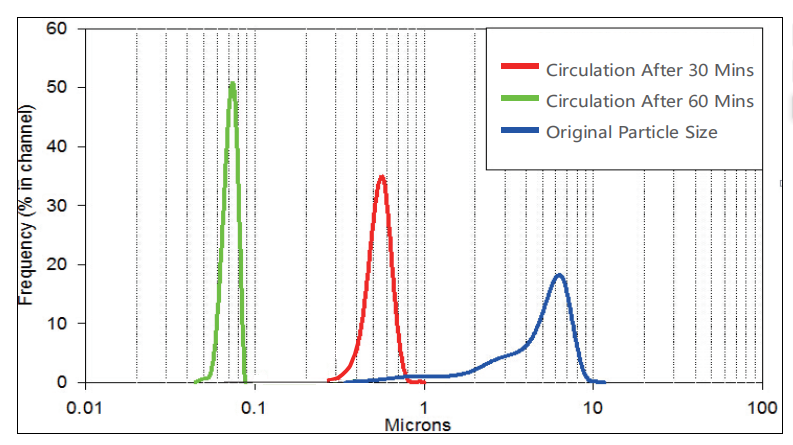
May 22, 2021
Company News

In industries such as lithium battery materials, electronic ceramics, coatings, inks, pharmaceuticals, and advanced chemicals, particle size control has become a critical factor affecting product performance. As production standards continue to rise, manufacturers are increasingly evaluating whether traditional ball milling technology can still meet modern processing requirements.
When comparing ball mill vs bead mill, the answer depends largely on the desired particle size, production efficiency, material purity, and operational costs. While ball mills remain widely used for coarse grinding and pre-processing applications, bead mills have become the preferred solution for fine grinding and ultra-fine particle dispersion.
This article compares the two technologies from the perspectives of working principles, grinding efficiency, particle size capability, contamination control, and investment value to help manufacturers choose the right solution for their production goals.
The fundamental difference between a ball mill and a bead mill lies in how grinding energy is generated and transferred to the material.
A ball mill consists of a rotating cylindrical shell partially filled with steel balls, ceramic balls, or other grinding media. As the cylinder rotates, the grinding media are lifted and then fall, creating impact and rolling forces that break down particles.
Key characteristics include:
Large grinding media
Impact and compression-based grinding
Batch or low-efficiency continuous operation
Suitable for coarse to medium grinding
Ball mills have been used for decades because of their simple structure and relatively low initial investment.
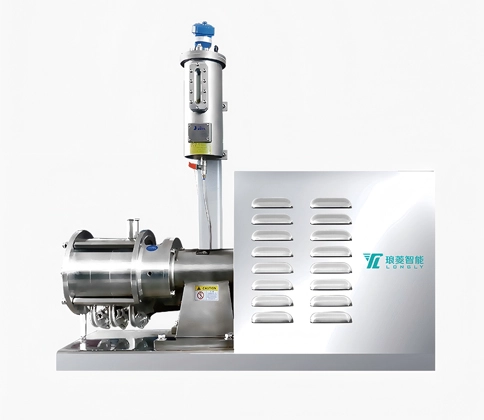
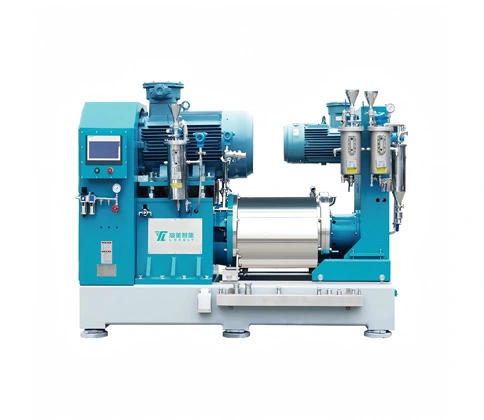
A bead mill uses a high-speed rotor within a compact grinding chamber filled with small, high-density grinding beads, typically zirconia beads. The rotating agitator generates intense shear, collision, and friction forces that rapidly reduce particle size.
Key characteristics include:
Small grinding media with high surface contact area
High-energy-density grinding zone
Continuous production capability
Suitable for ultra-fine and nano-scale dispersion
Because energy is concentrated within a much smaller grinding chamber, bead mills can achieve significantly faster and more efficient particle size reduction.
For manufacturers focused on throughput and operational efficiency, this is often the most important comparison.
Traditional ball mills generally require longer residence times to achieve desired fineness.
Common challenges include:
Long grinding cycles
Higher labor involvement for batch processing
Lower energy utilization efficiency
Difficulty maintaining consistent particle size distribution
As particle size requirements become finer, grinding time increases substantially.
Modern bead mills are designed for high-intensity grinding and continuous production.
Benefits include:
Faster particle size reduction
Higher production throughput
Continuous processing capability
Better process stability
Easier automation and scale-up
For large-scale manufacturing facilities, these advantages often translate into lower operating costs and improved production consistency.
| Factor | Ball Mill | Bead Mill |
|---|---|---|
| Grinding Mechanism | Impact & Rolling | Shear & Collision |
| Production Mode | Batch / Semi-Continuous | Continuous |
| Grinding Speed | Slower | Faster |
| Energy Density | Low | High |
| Automation Potential | Limited | High |
| Production Efficiency | Moderate | High |
Particle size requirements have become increasingly demanding, especially in battery materials, pigments, pharmaceuticals, and electronic materials.
Ball mills are generally effective for:
Coarse grinding
Intermediate particle size reduction
Pre-treatment before fine grinding
However, achieving stable submicron particle sizes is often difficult due to limitations in energy transfer efficiency.
Bead mills excel in applications requiring:
Submicron grinding
Nano-dispersion
Narrow particle size distribution
High-performance material processing
Modern bead mill systems can consistently produce particle sizes in the submicron and nanometer range while maintaining product uniformity.
This capability has made bead mills indispensable in industries where particle size directly affects conductivity, color strength, stability, or bioavailability.
Material purity is another critical consideration, particularly for battery, pharmaceutical, and electronic applications.
Because ball mills use larger grinding media, wear can generate contamination over extended operation periods.
Potential concerns include:
Metal contamination from steel balls
Increased impurity levels
More frequent media replacement
Reduced suitability for high-purity products
Modern bead mills frequently utilize high-purity zirconia grinding beads that offer:
Excellent wear resistance
Long service life
Reduced contamination risk
Better compatibility with sensitive materials
For manufacturers producing advanced functional materials, contamination control often becomes a decisive factor favoring bead mill technology.
Although ball mills remain valuable in many industries, their role is increasingly shifting toward upstream processing tasks such as:
Raw material size reduction
Pre-grinding operations
Bulk mineral processing
Meanwhile, bead mills have become the preferred solution for final particle size control and high-performance dispersion.
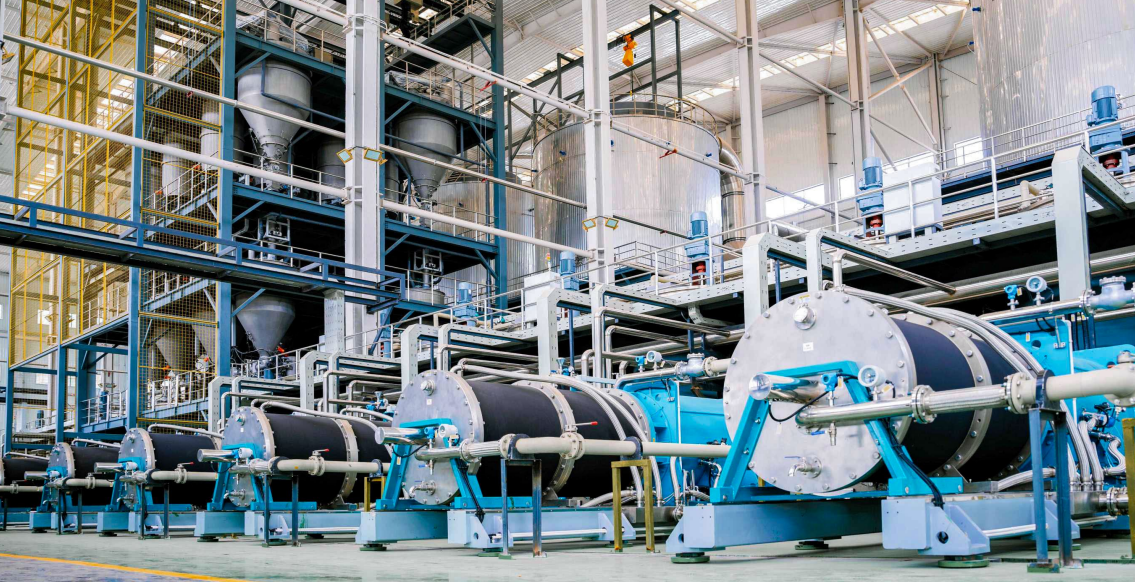
Industries increasingly adopting bead mill technology include:
Lithium-ion battery materials
Electronic ceramics
Nano materials
Coatings and paints
Printing inks
Pharmaceuticals
Cosmetic ingredients
For new production lines and capacity expansion projects, manufacturers are often prioritizing bead mill systems due to their superior efficiency, lower unit energy consumption, and ability to support continuous manufacturing.
As particle size requirements continue to become more demanding, equipment performance plays an increasingly important role in production economics.
Longly's bead mill systems are specifically engineered for:
High-viscosity materials
High solid-content slurries
Continuous production environments
Ultra-fine grinding applications
Precise particle size control
Compared with traditional ball milling solutions, Longly bead mills provide higher energy density, improved grinding efficiency, and more stable product quality. These advantages help manufacturers increase productivity while reducing overall operating costs.
For companies seeking to upgrade existing production lines or build new fine-grinding facilities, Longly's advanced bead milling technology offers a practical pathway toward higher efficiency and greater competitiveness.
A ball mill uses large grinding balls and relies mainly on impact and rolling forces, while a bead mill uses small grinding beads and high-speed shear forces for much finer grinding.
A bead mill is generally the preferred choice because it can achieve stable submicron and nanometer particle sizes with better consistency.
In most fine-grinding applications, bead mills provide higher energy utilization efficiency and shorter processing times than traditional ball mills.
Zirconia beads offer high density, excellent wear resistance, long service life, and low contamination risk, making them ideal for precision grinding.
Typically not. Ball mills are often used for pre-grinding, while final particle size reduction and dispersion are usually completed using bead mills to meet modern battery performance requirements.