 English
 日本語
日本語 한국어
한국어 français
 tiếng việt
 Indonesia
 Español
 العربية
 русский
 português
 Deutsch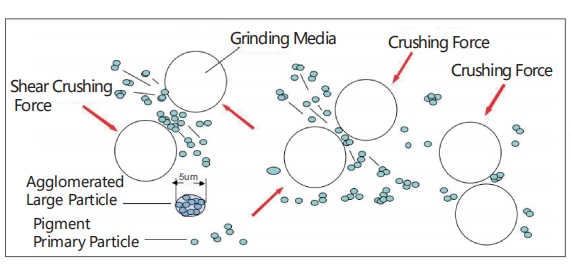
Oct 19, 2024
Exhibitions & Events

In modern wet grinding and dispersion processes, the bead mill often receives most of the attention. However, experienced engineers know that grinding media is the true heart of a bead mill system. Even the most advanced bead mill cannot achieve optimal performance if the grinding beads are poorly matched to the material being processed.
Choosing the right grinding media directly affects particle size distribution, production efficiency, equipment wear, contamination risk, and operating costs. Whether you are producing lithium battery materials, ceramic powders, titanium dioxide, or advanced functional materials, understanding grinding media selection is essential for achieving finer particles without bead breakage or product contamination.
This guide explains the key factors behind grinding media selection and provides practical recommendations for common industrial applications.
The grinding mechanism inside a bead mill depends on millions of collisions between the grinding beads and material particles. The effectiveness of these collisions is determined largely by the properties of the grinding media.
An ideal grinding bead should achieve three goals:
Grind particles to the target fineness
Resist breakage during high-energy operation
Minimize contamination of the final product
Failure in any of these areas can reduce product quality and increase maintenance costs.
Density determines the impact energy generated during bead collisions.
| Grinding Media Type | Relative Density | Typical Application |
|---|---|---|
| Zirconia Beads (High Density) | High | Battery materials, ceramics |
| Zirconium Silicate Beads | Medium | Titanium dioxide, coatings |
| Glass Beads | Low | Low-viscosity dispersions |
| Composite Ceramic Beads | Medium-Low | Carbon materials |
Higher-density beads generate stronger impact forces, making them suitable for hard-to-grind materials and ultra-fine grinding applications.
However, excessive density can increase wear on separators, screens, and mechanical seals. Therefore, density must be balanced with process requirements.
Hardness determines the bead’s resistance to wear.
Benefits of high-hardness grinding media include:
Lower wear rate
Longer service life
Reduced contamination
More stable particle size distribution
For abrasive materials such as alumina, zirconia beads are generally preferred because of their superior wear resistance compared with glass or lower-grade ceramic media.
Bead size significantly influences grinding efficiency.
General guidelines:
Large beads: Higher impact force, suitable for coarse grinding
Small beads: Higher contact frequency, suitable for ultra-fine grinding
Typical bead size selection:
| Target Process | Recommended Bead Size |
|---|---|
| Pre-grinding | 1.0–2.0 mm |
| Fine grinding | 0.5–1.0 mm |
| Ultra-fine grinding | 0.03–0.5 mm |
Uniform bead size distribution helps maintain stable energy transfer and consistent product quality.
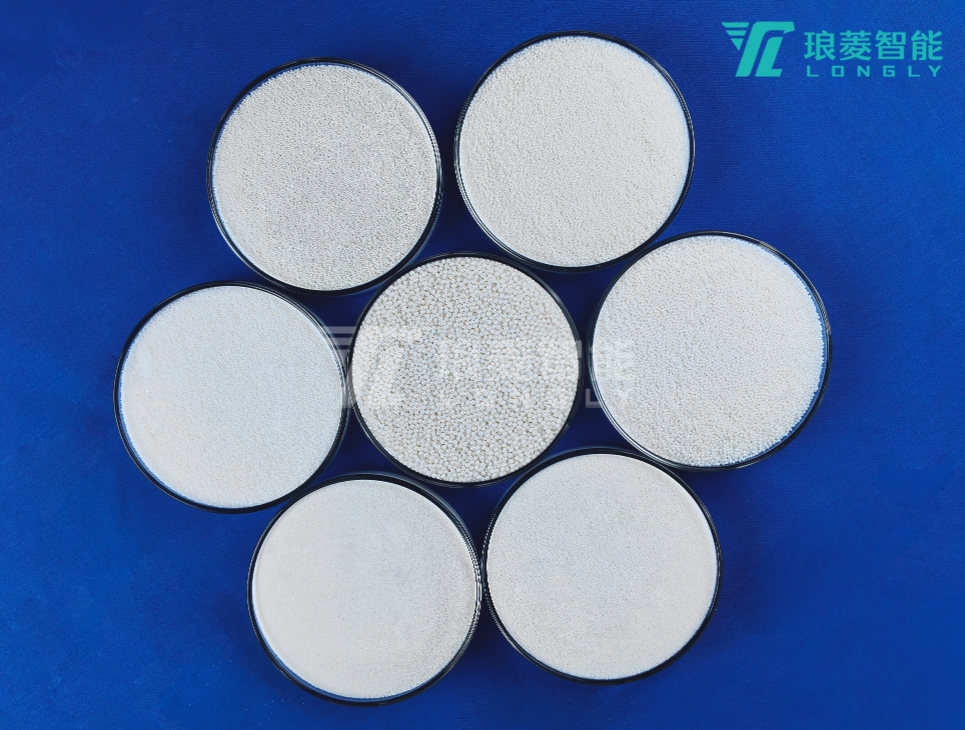
High-quality grinding media should exhibit excellent roundness.
Benefits include:
Smoother circulation inside the grinding chamber
Reduced screen wear
Lower mechanical seal stress
More uniform grinding performance
Poorly shaped beads can create uneven loads that accelerate equipment wear and increase the risk of bead fracture.
In industries such as lithium batteries, electronic ceramics, pharmaceuticals, and advanced materials, contamination control is critical.
Low-wear grinding media helps:
Reduce foreign particle contamination
Improve product consistency
Lower grinding media consumption
Reduce downtime for media replacement
The true cost of grinding media should be evaluated based on total operating cost rather than purchase price alone.
Lithium iron phosphate has relatively high density and requires efficient particle size reduction.
Recommended media:
High-density yttria-stabilized zirconia beads
Excellent wear resistance
Strong grinding force
Suitable for nano-scale particle control
This combination helps maximize grinding efficiency while maintaining battery-grade purity.
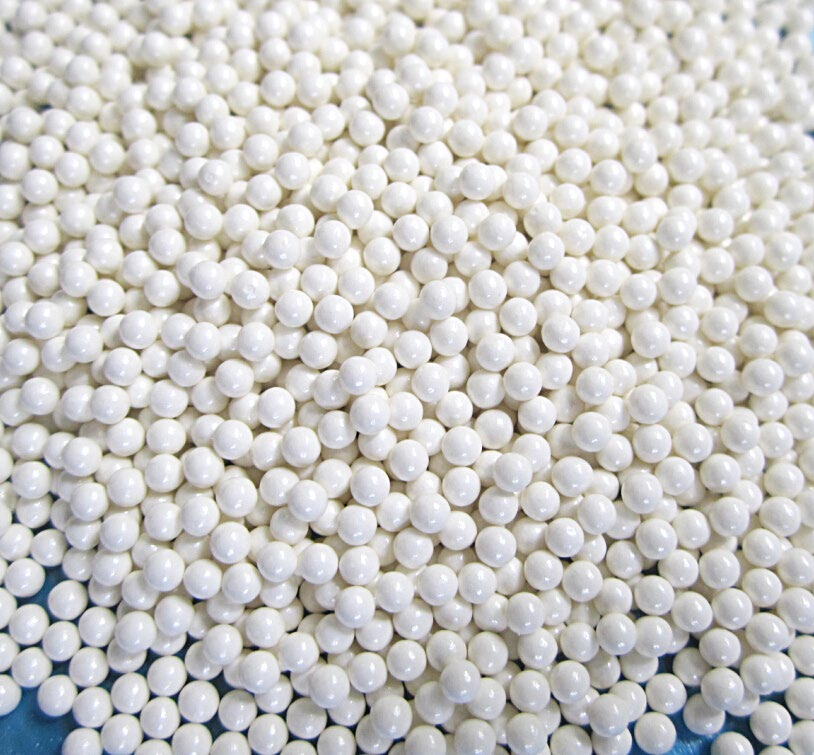
Silicon-carbon materials are sensitive to contamination and often require controlled impact energy.
Recommended media:
Medium-density ceramic beads
Specialized composite zirconia beads
Benefits:
Lower risk of particle damage
Reduced equipment wear
Stable dispersion performance
Alumina is highly abrasive and places heavy demands on grinding media durability.
Recommended media:
High-purity zirconia beads
Advantages:
Exceptional wear resistance
Long service life
Reduced contamination from media wear
Titanium dioxide production often prioritizes operating cost and production efficiency.
Recommended media:
Zirconium silicate beads
Advantages:
Good wear resistance
Competitive cost-performance ratio
Suitable for large-scale continuous production
Grinding media selection impacts more than grinding performance.
Poorly matched media can cause:
Increased separator screen wear
Higher mechanical seal load
More frequent maintenance
Reduced equipment lifespan
Generally:
| Grinding Media Property | Effect on Equipment |
|---|---|
| Excessive Density | Increased screen and seal wear |
| Poor Roundness | Higher mechanical stress |
| High Breakage Rate | Screen blockage and contamination |
| Low Wear Resistance | Accelerated component wear |
Selecting premium grinding media often reduces total maintenance costs despite a higher initial investment.
As a professional manufacturer of grinding and dispersion equipment, Longly offers high-performance zirconia grinding media designed for demanding industrial applications.
Recommended matching solutions include:
| Application | Recommended Grinding Media | Longly Equipment |
|---|---|---|
| LFP Cathode Materials | High-density zirconia beads | NT-V Series Nano Bead Mill |
| Silicon-Carbon Anodes | Composite zirconia beads | Longly Nano Grinding Systems |
| Alumina Powders | Wear-resistant zirconia beads | N Series Bead Mill |
| Titanium Dioxide | Zirconium silicate beads | LDM Series Bead Mill |
By combining optimized grinding media with advanced bead mill technology, manufacturers can achieve finer particle sizes, higher production efficiency, and longer equipment service life.
Grinding media selection is one of the most important decisions in any bead milling process. The best grinding media is not necessarily the most expensive—it is the one that achieves the desired particle size while minimizing bead breakage, contamination, and equipment wear.
When evaluating grinding media, focus on five key factors: density, hardness, particle size distribution, sphericity, and wear rate. Proper matching between the material, grinding media, and bead mill can significantly improve productivity and reduce total operating costs.
Longly’s zirconia bead portfolio and advanced bead mill systems are engineered to help manufacturers achieve the ideal balance of grinding efficiency, product purity, and equipment reliability across battery materials, ceramics, pigments, and advanced material applications.
High-density yttria-stabilized zirconia beads are commonly preferred because they provide strong grinding force, low wear, and excellent purity control.
Density affects collision energy. Higher-density beads typically improve grinding efficiency for hard materials but may increase equipment wear if not properly matched.
Smaller beads create more collision points and are generally better for ultra-fine grinding, while larger beads are more effective for coarse particle reduction.
Zirconium silicate beads are widely used because they offer a strong balance between performance, durability, and operating cost.
Yes. Poor-quality or improperly selected media can accelerate wear on screens, mechanical seals, and internal components, leading to higher maintenance expenses and downtime.