 English
 日本語
日本語 한국어
한국어 français
 tiếng việt
 Indonesia
 Español
 العربية
 русский
 português
 Deutsch
Dec 17, 2024
Blog

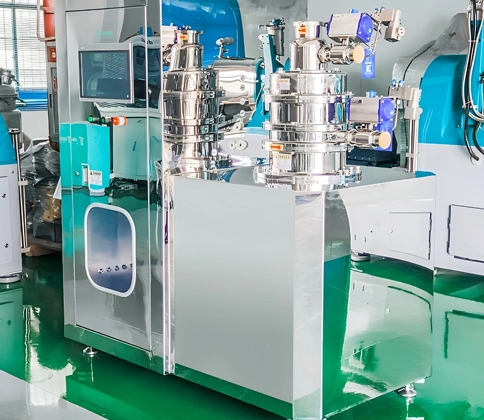
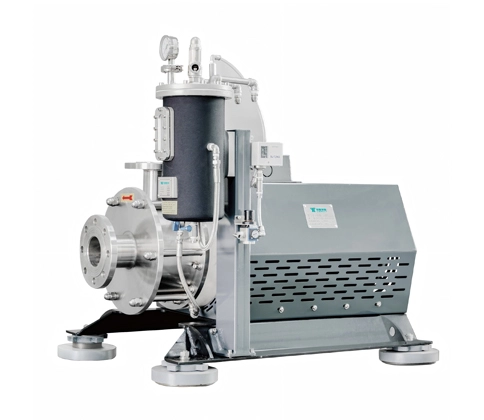
As industries such as lithium-ion batteries, sodium-ion batteries, advanced ceramics, electronic materials, and nanomaterials continue to evolve, the expectations placed on grinding equipment are changing rapidly. Manufacturers are no longer focused solely on particle size reduction. They are looking for higher productivity, stable product quality, lower energy consumption, and smarter process control.
Against this backdrop, bead mill technology is entering a new stage of development. In 2026 and beyond, intelligentization, large-scale production capability, energy-efficient grinding structures, and ultra-fine grinding performance are expected to become the key drivers shaping the future of the industry.
One of the most significant bead mill technology trends is the shift toward intelligent manufacturing.
Traditional grinding processes often rely heavily on operator experience. However, as product quality requirements become more stringent, especially in battery materials and nanotechnology applications, manufacturers need greater process visibility and control.
Modern intelligent bead mills are increasingly equipped with:
Real-time temperature monitoring
Viscosity detection systems
Grinding chamber pressure monitoring
Media wear monitoring
Predictive maintenance functions
Production data collection and traceability systems
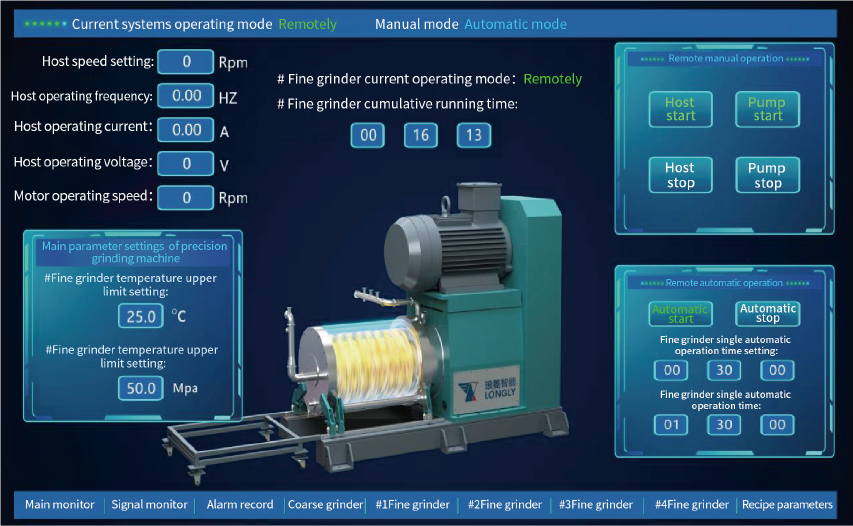
These sensors continuously collect operating data and help operators optimize grinding conditions automatically. Real-time monitoring reduces the risk of product inconsistency while improving equipment reliability.
For large-scale manufacturing plants, intelligent control systems also make it easier to integrate bead mills into automated production lines, supporting Industry 4.0 initiatives and digital factory development.
| Function | Benefit |
|---|---|
| Real-time process monitoring | Stable product quality |
| Predictive maintenance | Reduced downtime |
| Automated parameter adjustment | Higher production efficiency |
| Data traceability | Improved quality control |
| Remote diagnostics | Faster technical support |
Another important direction in bead mill technology trends is equipment scaling.
The rapid expansion of the new energy sector has created increasing demand for continuous and large-volume production. Battery manufacturers, in particular, require stable feeding capacity across industrial-scale production lines.
As a result, bead mills are being designed with:
Larger grinding chambers
Higher throughput rates
Continuous production capability
Improved heat management systems
However, larger equipment alone is not enough. The drive system must also evolve to maintain efficiency and reliability.
(1).png "/uploads/image/2026/06/29/NT-V 1000L, with Motor Permanent Magnet Direct Drive (PMDD)(1).png")
Permanent magnet direct drive (PMDD) motor technology is emerging as a preferred solution in advanced grinding equipment. Compared with conventional transmission systems, PMDD motors offer:
Higher energy conversion efficiency
Lower operating noise
Reduced mechanical wear
Simplified maintenance requirements
Improved long-term operational stability
The combination of large-capacity processing and high-efficiency drive technology is becoming a key feature of next-generation bead mills designed for battery material production and other high-demand applications.
Grinding efficiency remains a major concern for manufacturers seeking to reduce operating costs and improve productivity.
To address this challenge, bead mill technology trends increasingly focus on optimizing grinding chamber structures and rotor designs.
Two grinding technologies are gaining widespread adoption:
Turbine-type rotors create strong fluid circulation and improve bead movement within the grinding chamber. This enhances energy transfer efficiency and helps achieve uniform particle size distribution.
.jpg)
Advantages include:
Improved dispersion performance
Reduced processing time
Better handling of medium-viscosity materials
Pin-type bead mills generate extremely high energy density by increasing collision frequency between grinding media and particles.
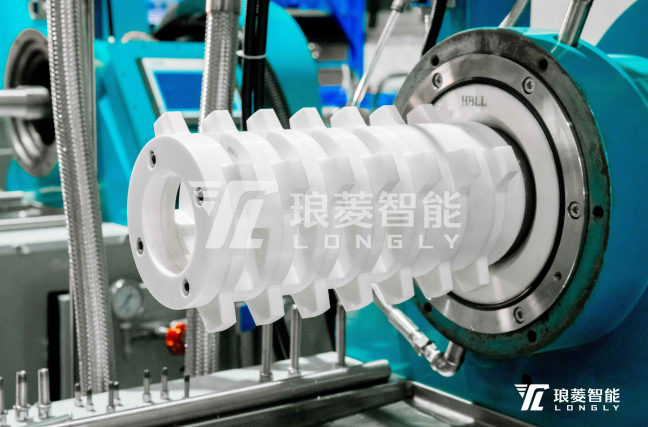
Advantages include:
Superior grinding efficiency
Faster particle size reduction
Suitable for high-viscosity materials
Excellent performance for nano-scale applications
As industries demand finer particle sizes and higher productivity, high-energy grinding structures are becoming essential for maintaining competitive production efficiency.
Perhaps the most exciting development in bead mill technology trends is the advancement of ultra-fine grinding capability.
Applications such as:
Lithium battery cathode materials
Conductive pastes
Semiconductor materials
Advanced ceramics
Functional coatings
Nanomaterials
require increasingly precise particle size control.
To achieve this, manufacturers are adopting smaller grinding media with higher density and better wear resistance.
One notable development is the use of ultra-fine zirconia beads as small as 0.015 mm.
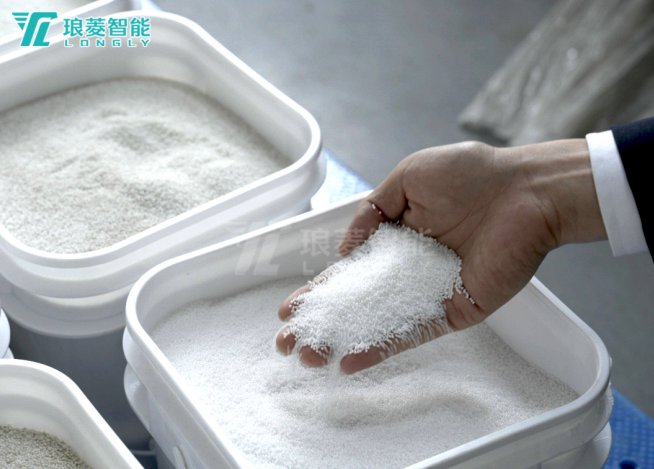
Benefits of smaller grinding media include:
Increased contact points
Higher collision frequency
More uniform particle size distribution
Better nano-scale grinding performance
This enables manufacturers to achieve tighter particle size specifications while maintaining product consistency, a critical requirement for high-end applications.
As nano-material technology continues to expand, bead mills capable of handling ultra-small grinding media will play an increasingly important role across advanced manufacturing industries.
As the industry moves toward intelligentization, energy efficiency, and nano-scale processing, equipment suppliers must continue innovating to meet evolving customer requirements.
Longly has been actively investing in:
Intelligent control systems with real-time monitoring functions
Advanced pin-type and turbine grinding structures
High-efficiency drive technologies
Solutions compatible with ultra-fine zirconia grinding media
Large-capacity production equipment for battery and new energy materials
By combining smart automation with high-performance grinding technology, Longly helps manufacturers improve production efficiency, maintain product quality, and prepare for future industry demands.
The future of bead mill technology is no longer defined solely by grinding performance. Intelligent process control, larger production capacity, energy-efficient drive systems, optimized grinding structures, and nano-scale particle size control are becoming the new standards for advanced manufacturing.

Companies that invest in next-generation bead mill technology today will be better positioned to meet the growing demands of battery materials, nanomaterials, electronic materials, and other high-value industries.
With continuous innovation in intelligent control systems and high-efficiency grinding solutions, Longly remains committed to helping customers achieve higher productivity, greater process stability, and long-term competitive advantages in the evolving materials processing market.
The major trends include intelligent monitoring systems, larger-capacity equipment, permanent magnet direct drive motors, high-energy grinding structures, and ultra-fine grinding capabilities for nanomaterials.
Intelligent systems provide real-time monitoring of temperature, viscosity, pressure, and equipment conditions, helping improve product consistency and reduce downtime.
Pin-type bead mills generate higher energy density and collision frequency, making them highly effective for nano-scale grinding and high-viscosity materials.
Smaller zirconia beads increase contact points and collision frequency, enabling finer particle size distribution and better control of nano-scale grinding processes.
Industries including lithium-ion batteries, sodium-ion batteries, electronic materials, advanced ceramics, coatings, inks, pharmaceuticals, and nanomaterials can benefit significantly from these technological advancements.